Publishing a Book on Christian Eschatology: A Complete Guide
Learn how to publish a book on Christian eschatology with this complete guide. Explore writing, research, editing, publishing options, and marketing strategies to share your insights on biblical prophecy and the end times.
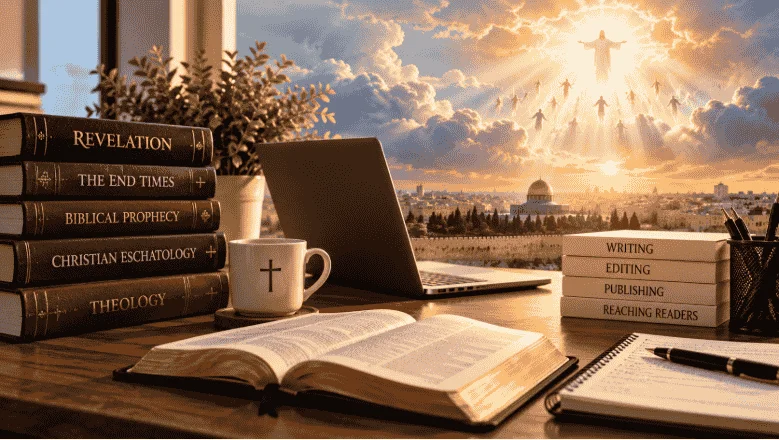
Few topics cause readers to feel like it’s the end of the world. You already understand the pull if you have studied it for years. The real question now is: how do you get those pages into the hands of readers?
Publishing a book on Christian eschatology takes more than deep study. It takes clarity, patience, and a plan. Here is how to start.
Christian Eschatology: What Is It?
What is christian eschatology?
It is the study of last things, to put it simply. It encompasses death, judgment, heaven, hell, Christ's second coming, and the ultimate renewal of creation.
Christian eschatology explained in one line, “Where is all of this heading?”
Readers come to it from every background. Some want comfort. Some want answers. Some just want to understand what their church teaches.
Understand Your Part of the Subject
Biblical eschatology is very comprehensive. Each of the prophecies found in Daniel, the Gospels, and Revelation has its own unique style and symbols. Before you write, choose a lane.
Different traditions also see these themes differently. For example, catholic church eschatology focuses on the particular judgment, purgatory, and the resurrection of the body. Many Protestant views lean on timelines of the tribulation and the millennium.
Examine the Shelf First
Before you write a word, look through Christian eschatology books. Take note of what feels thin, crowded, and sells.
Consider this:
Who is this book for?
What question does it answer that others skip?
Is my tone scholarly, pastoral, or plain-spoken?
Your answers shape everything that follows.
How to Get Your Book Out
Describe your audience: Different books are needed by a pastor, a student, and an inquisitive newcomer.
Make an early outline: Eschatology can spread quickly. You stay focused when you have a clear map.
Use simple language when writing: Big vocabulary is not necessary for big ideas.
Verify your sources: Scripture references and quotes must be accurate. Readers will notice.
Get a fresh set of eyes: Get it reviewed by a theologian or a trusted editor.
Decide on your course: Self-publishing, hybrid models, and traditional publishers are all effective. Before committing, weigh your options because costs and timelines can differ.
Arrange the launch: Distribute it to online communities, study groups, and churches.
A Few Common Mistakes
Attempting to include every viewpoint in a single book
Employing complex theological terminology without providing context
Disregarding the title and cover
Ignoring a professional edit
Avoid these, and you are already ahead of many first-time authors
Concluding Remarks
Eschatology is concerned with endings, hope, and the future. That discussion can include your book. Write for one reader at a time, start small, and maintain clarity.